
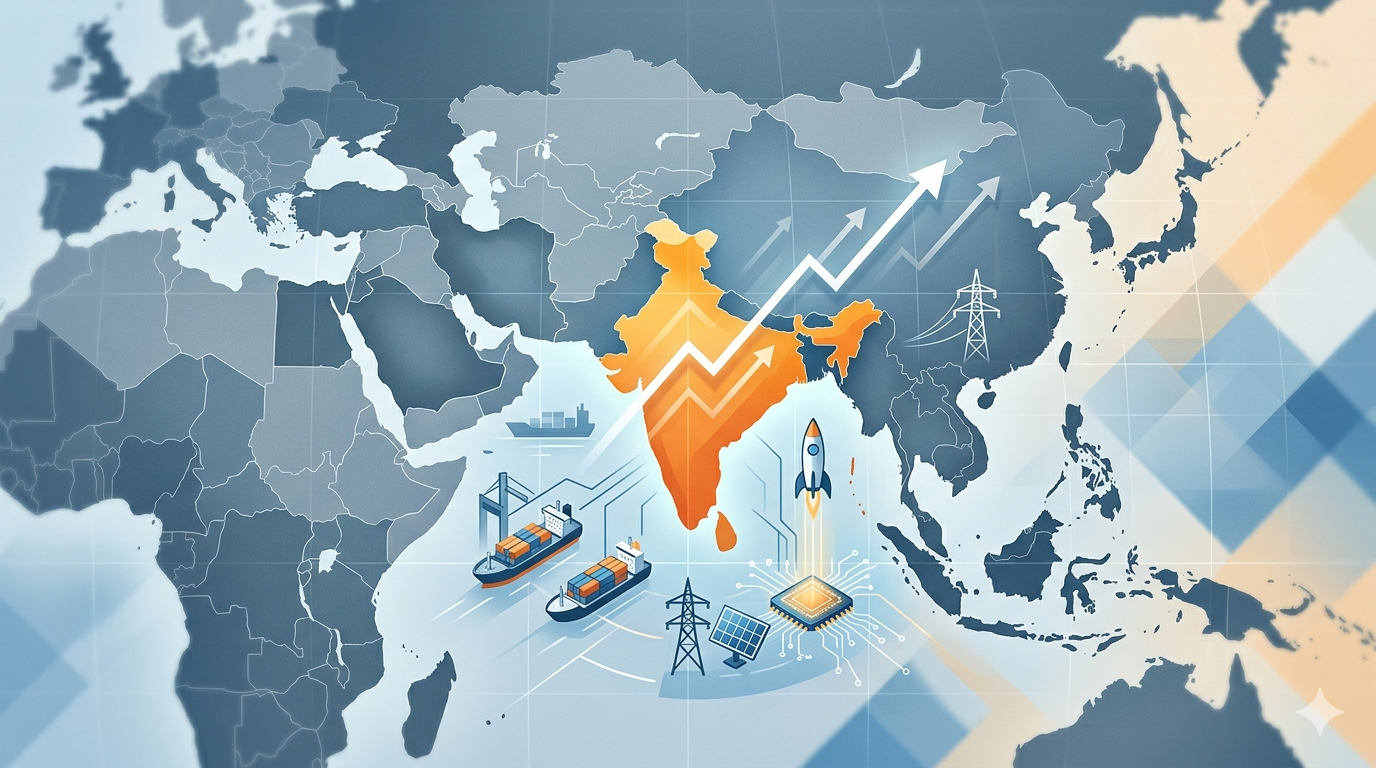


The recent Gulf conflict and its ceasefire have once again reminded the world how quickly geopolitical shocks can unsettle markets. India, given its dependence on energy imports, did see a short-term impact—equity markets corrected and the currency experienced some pressure. Yet, what stands out more clearly is not the disruption, but India’s remarkable ability to absorb such shocks and emerge stronger.
Almost immediately after the ceasefire, Vikram Misri’s visit to the United States signaled India’s forward-looking strategic intent. The focus areas—trade, defence cooperation, technology, and critical minerals—are not incidental; they reflect the pillars on which India is building long-term resilience and global relevance.
This strategic direction aligns closely with the broader economic narrative highlighted by Shaktikanta Das in his recent address to AIMA. India continues to demonstrate resilience through strong macroeconomic fundamentals—GDP growth of around 7%, controlled inflation, and robust foreign exchange reserves. These factors provide stability even in periods of global uncertainty.
India’s geopolitical positioning is another unique strength. As Shyam Saran, ex foreign secretary has observed, India is increasingly seen as a “friend of all.” This balanced stance allows it to play a constructive role in post-conflict rebuilding across the Gulf region, including engagement with both Israel and Iran, while maintaining its long-standing strategic relationships.
The temporary market correction and currency depreciation during the conflict were largely driven by external factors, particularly oil price sensitivity. However, India is actively addressing these vulnerabilities through initiatives aimed at energy diversification, domestic capacity building, and defence preparedness.
Looking ahead, India’s structural advantages become even more compelling. Its demographic dividend, expanding middle class, and growing global integration position it as one of the most attractive large economies in an uncertain world. In a phase where many economies are grappling with slower growth and policy constraints, India continues to offer stability, scalability, and growth.
In a world searching for anchors of stability, India is steadily reinforcing its position—not just as a resilient economy, but as a strategic, economic, and geopolitical force that continues to stand out.
From an investment perspective, such periods of volatility often create opportunity. Current market levels and currency positioning provide a favorable entry point for long-term investors. Portfolios aligned with India’s growth story—while maintaining prudent diversification—are well placed to benefit from the 2026–2030 period, which could be a defining phase for wealth creation.
That said, an obvious near-term risk remains the fragility of the ceasefire, and therefore investments can be approached in a staggered manner. However, it does appear that the U.S. may find it difficult to re-enter a full-scale conflict, given domestic political considerations.
